
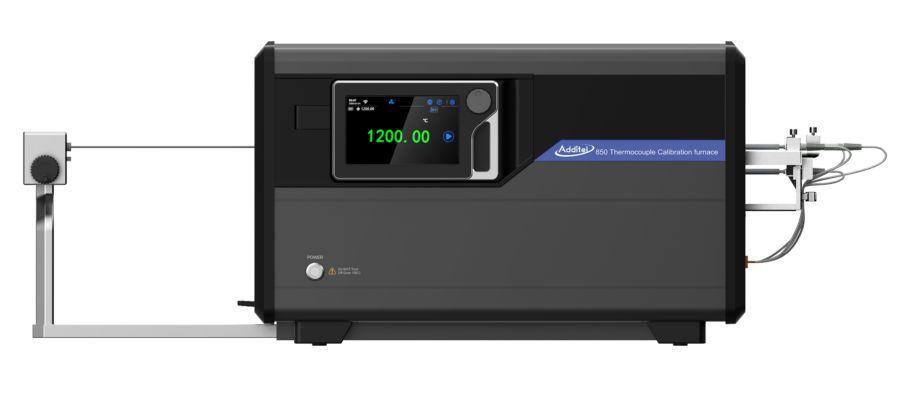
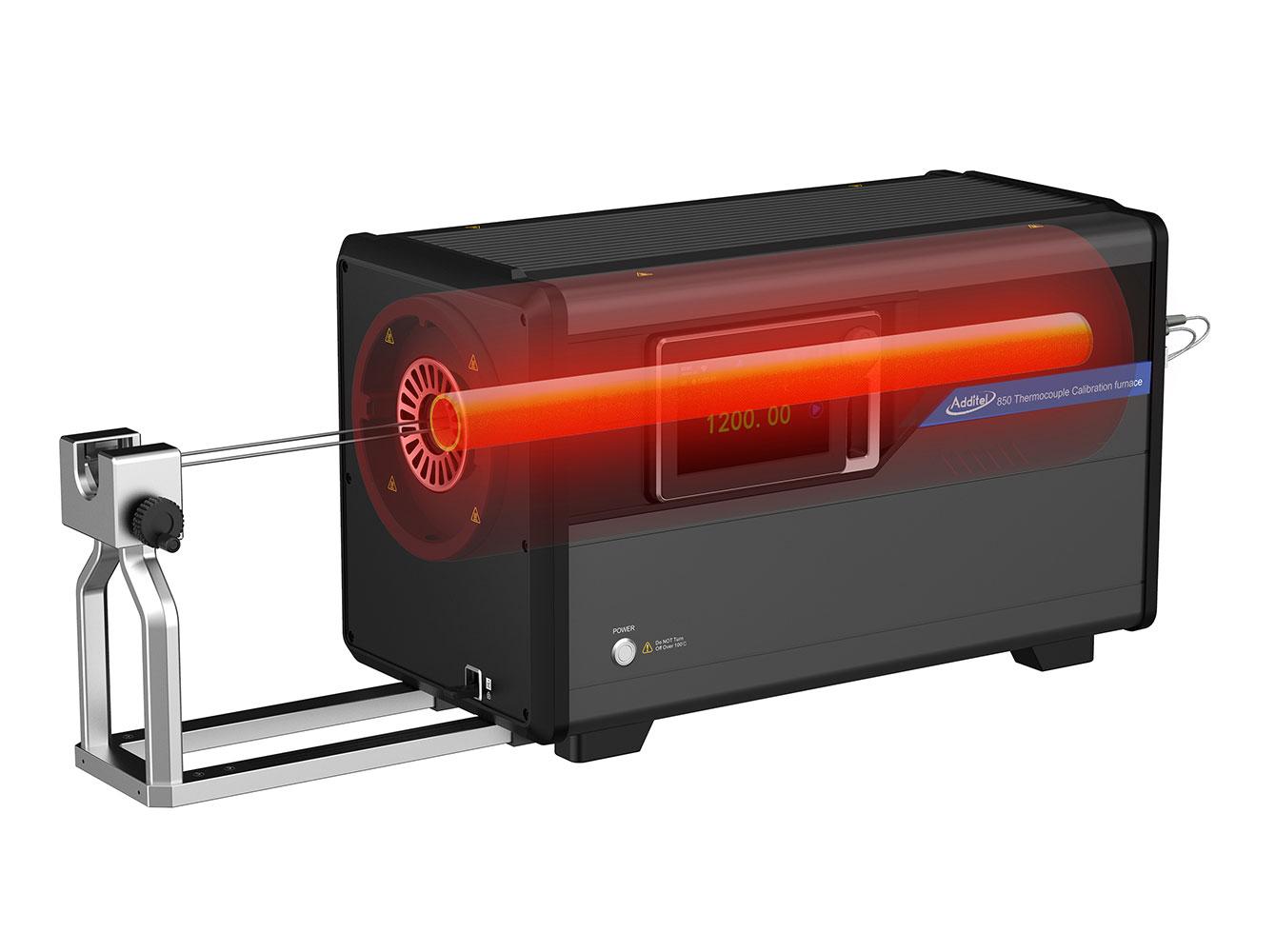
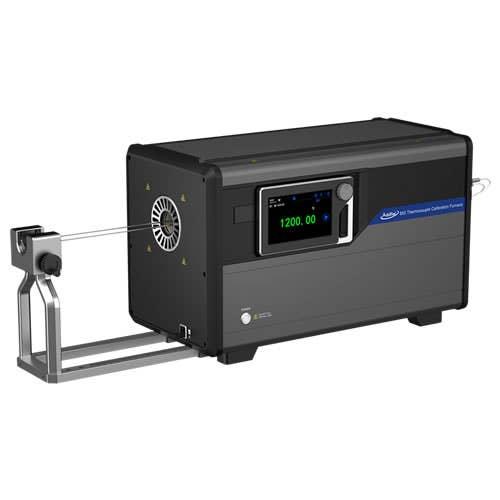
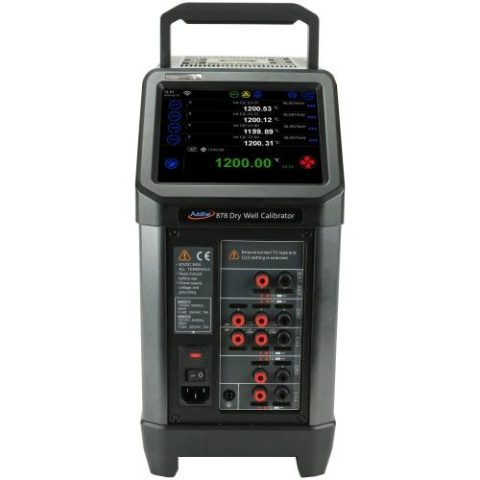
Additel 850-1200 Laboratory Thermocouple Calibration Furnace
Key features
- Temperature range: typically ambient to 1200 °C
- Application: calibration and verification of thermocouples and other temperature sensors
- Laboratory design: intended for stable, repeatable temperature calibration work
- High-temperature furnace: suitable for thermocouples requiring temperatures well above the range of conventional dry-block calibrators
- Calibration capability: can be used with a reference thermometer and appropriate measurement equipment to determine the temperature error of the device under test
- Typical users: calibration laboratories, metrology departments, industrial maintenance facilities, and temperature-instrument manufacturers
A typical setup consists of:
Reference thermocouple / temperature sensor → Additel 850-1200 furnace → DUT thermocouples → precision temperature measurement system
The furnace establishes a controlled temperature environment while the reference sensor provides the measurement against which the thermocouples under test are compared.
What it is useful for
| Application | Suitability |
|---|---|
| Thermocouple calibration | ✓ |
| High-temperature sensor verification | ✓ |
| Laboratory temperature calibration | ✓ |
| Industrial thermocouple testing | ✓ |
| Routine temperature checks | ✓ |
| Low-temperature calibration | Limited — depends on the specific configuration |
| General-purpose heating | Not its primary purpose |
Important: For an actual calibration system, the furnace itself is only one component. The overall uncertainty also depends on the reference sensor, readout, sensor placement, loading, temperature uniformity/stability, and calibration procedure.
If you’re evaluating this instrument for purchase or laboratory use, I can also provide a detailed specification sheet for the Additel 850-1200, including temperature range, stability, uniformity, well dimensions, heating time, accuracy, power requirements, and recommended reference thermocouples.
There are no reviews yet.